What if the cheapest EV is also the dumbest?
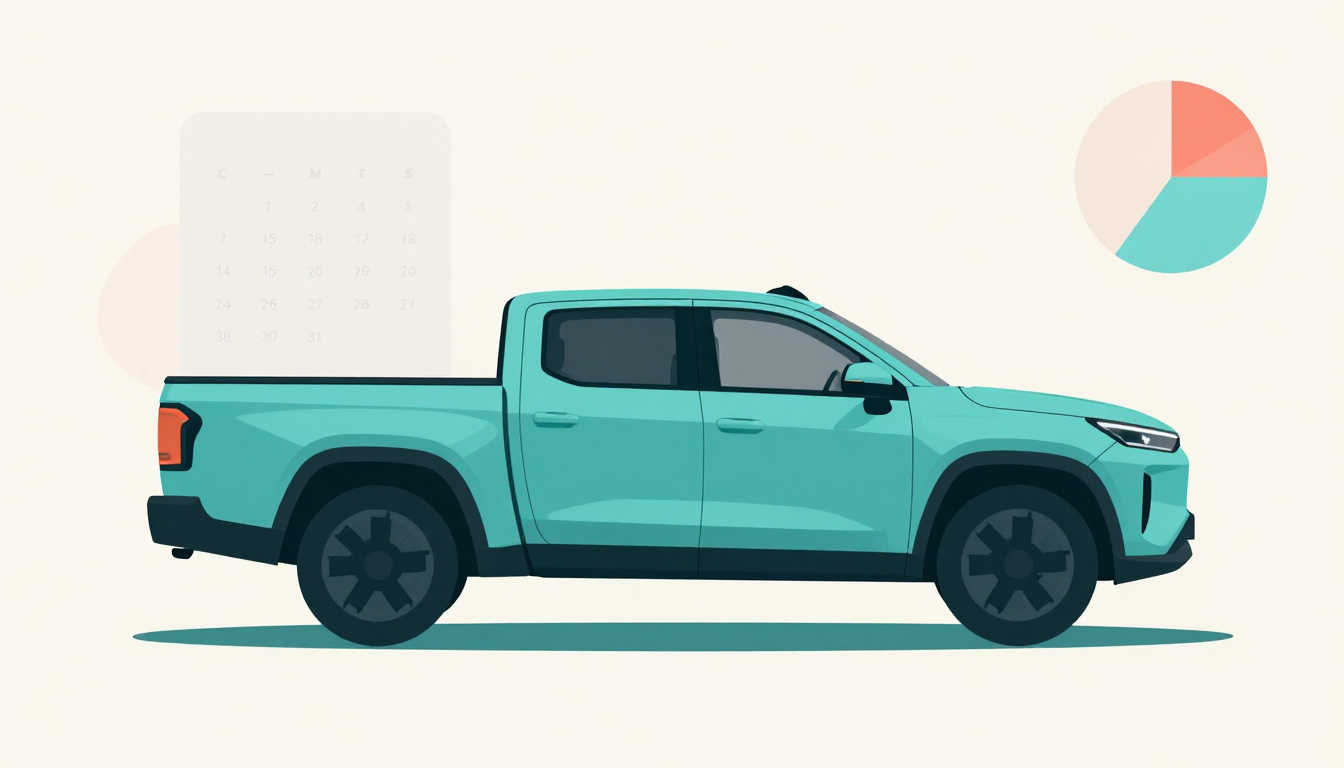
You read that right—no touchscreen, no adaptive cruise, no Wi-Fi, and yes, even manual hand-crank windows. Slate Auto’s $24,950 electric pickup is a direct challenge to everything the industry’s been selling for the last decade: bigger screens, more sensors, louder software notifications, and increasingly complicated software updates. It’s not that Slate thinks you don’t need tech—it’s that they believe most people simply don’t need the over-engineered digital mess inside your average 2026 crossover.
I stepped into the pre-production Slate truck in Los Angeles last week with low expectations. My mental image of a “budget EV” involved flimsy plastics, vague range anxiety, and a ride that would make you question your life choices on every bump. Instead? A surprisingly cohesive package that didn’t feel cheap, wasn’t desperate to upsell you a hundred “convenience” features, and was quietly serious about just getting you where you need to go.
The Slate isn’t trying to be a Tesla clone or even a Bolt Alternative. It’s something rarer: an electric truck that dares to assume you don’t actually want your driver assists deciding when you brake—or when your entertainment system asks if you’d like a recommendation for your next lunch.
A 600-part revolution (yes, really)
Most pickup trucks are Frankenstein monsters of steel stampings, cast aluminum brackets, and layered electronics—over 6,000 parts in some cases. Slate did something wild: they reduced that number to roughly 600, about one-tenth of what you’ll find under your average Ford or GM badge. No paint shop required, no complex painting routines, and—critically—no need for the kind of large, capital-intensive stamping presses most automakers depend on.
The body panels are a single mold of unpainted plastic, originally developed for utility vehicles and now refined for the Slate. That’s why they come in shades of gray, deep charcoal, or a few subtle wraps. You don’t paint them—you wrap them (more on that in a bit). And the simplicity pays off everywhere: the frunk is cavernous, the rear cabin surprisingly quiet (especially given the lack of a traditional ICE sound-deadening routine), and even the door hinges feel solid.
The seats? Not an afterthought. I spent a full lap around the test track and came away genuinely impressed—not by the lumbar support (there is none), but by how little I missed it. The seating position, while upright and practical, didn’t cause fatigue after 20 minutes of city driving. That says something about the folks who actually sat in prototypes for weeks, tweaking cushion shapes instead of fiddling with screen resolution.
The real range—and charging—story
You’ll hear numbers like 180 miles, then 205 miles, and wonder what changed. Simple: Slate underpromised on purpose. In April 2026, when they first announced the truck, their internal range estimate was conservative. By June, with battery pack tuning tweaks and a couple of aerodynamic refinements, they quietly bumped it to the final 205 miles (EPA certified). That’s 3.3 miles per kWh, a respectable number for a truck with an open-bed silhouette and single-cab profile.
That’s not to say range anxiety goes away. If you’re doing highway trips between LA and Vegas, you’ll still need to plan stops. The battery pack is a 65 kWh gross / 63 kWh usable lithium iron phosphate (LFP) chemistry—a tradeoff Slate made for longevity and cost, not energy density.
Here’s where it gets interesting. At a DC fast charger (NACS compatible), the Slate tops out at 120 kW. That means you’ll likely spend about 30 minutes going from 20 to 80 percent. Compare that to the Chevy Bolt EV, which * claim* s up to 150 kW—but in real-world use, never quite hits it. Bolt owners routinely report peak charging speeds of 50–55 kW, sometimes less when the battery’s hot or your charger is congested. The Slate won’t win any charging speed contests, but it’s predictable and, crucially, consistent.
And if you’re driving around town? You’ll be fine. In fact, the real advantage here is AC charging. With a 11 kW onboard charger, you can go from 20 to 100 percent in about four hours using a Level 2 station—perfect for overnight charging at home or a fleet depot. You could even use a standard 120V wall outlet and finish overnight, albeit over 17 hours.
I asked Slate’s president of vehicles, Chris Barman, point-blank: “Who is this for?” His answer wasn’t sports car buyers or weekend adventurers. It was fleet managers, tradespeople, and people who just want a truck that works without extra friction.
The $24,950 question (and the Bolt comparison)
The Bolt EV starts at $27,600 before destination fees—$28,995 after. Its EPA-estimated range is 262 miles, which looks better on paper. But let’s talk about what that really means.
The Bolt includes a basic infotainment system, Bluetooth streaming (no Apple CarPlay or Android Auto), and standard safety features. The Slate? You get the same core electric drivetrain—181 hp, 195 lb-ft of torque, 0–60 mph in about eight seconds—but none of the digital extras. No touchscreen, no telematics modem unless you opt in ($275), and no voice controls. What you do get is a manual window crank, fabric seats with no heating or ventilation options in the base model, and a dashboard that’s literally just gauges.
Here’s the real comparison: if you’re willing to live without digital clutter, the Slate is $4,000 cheaper and still delivers most of the driving dynamics you actually use every day. That $4,000 gap covers a full year of insurance for many buyers—or a wrap job on the truck to make it stand out in a crowded lot.
Let me be blunt: if you expect your budget EV to do everything, it won’t. The Bolt’s 262 miles looks good, but only if you’re doing mostly city driving and have access to Level 2 charging. If your commute is 30 miles round-trip, the Bolt gives you zero buffer. The Slate’s 205 miles, with its predictable charging and simpler ownership model, might actually be less stressful for someone who just needs to get to work and back.
How far can you go? Five builds, one question: Do you even need all that stuff?
The Slate’s configurator went live recently, and I played around with it for an afternoon. Here’s what I found:
-
The “Blank Slate”: $24,950 for the bare-bones pickup. Two doors, manual crank windows, no stereo, no modem, just gauges and a steering wheel. If you want a floor liner or to protect the bed, add another $200–$300. A simple wrap ($499) will make it look less like a lab prototype.
-
The Work Truck: $28,594 (before tax or delivery). This version adds trim, a locking tailgate, a toolbox, and the $275 telematics modem (necessary for Bluetooth connectivity—yes, you can’t just pair your phone without it). Add a $499 purple wrap, and you’re under $29K for something that’s genuinely capable.
-
The Off-Road Brodozer: $32,924 and climbing. Add lift kit (price not yet finalized), all-terrain tires ($1,000+ upgrade), more external lighting (Slate has a whole ecosystem of light bars and LEDs), and you’re approaching $35K. The good news? It still doesn’t have Adaptive Cruise or a 17-inch screen.
-
The Fastback SUV: Starts at $31,950 and rises quickly with options. The variant I built ( pink, because why not) came in at $35,299. It’s a five-seater with rear bench seats, airbags, and that wrap I mentioned. And—no surprise here—still manual windows.
-
The Squareback SUV: $29,950 starts it, but the fully loaded version maxed out around $36,820. Yes, electric windows were originally rumored—but the configurator confirms they’re not available for now. Slate’s official line is that manual windows are “part of the experience.” You’ll just have to get used to your arm muscles.
Pre-orders, delivery timelines, and the “Internet vs. reality” divide
Slate announced in April 2026 that over 180,000 people had placed a $50 refundable deposit for the truck. That number grew after the hands-on press reviews hit in June, and now those deposit-holders are being asked to convert their $50 to a non-refundable $250 upgrade—or start fresh with a flat $300 deposit if they haven’t reserved yet.
The delivery window is interesting: those who upgrade by July 24, 2026, get priority access to the Q4 2026 production run. Everyone else waits longer—perhaps months, maybe until mid-2027. Slate’s factory in Warsaw, Indiana, is rated for 150,000 vehicles per year. If they hit that target, and the pre-order numbers hold up, roughly a third of buyers will be on the waitlist initially.
The bigger question isn’t just “will people buy it?” The real test is whether folks who love the idea of a bare-bones EV online actually buy one when it’s time to sign papers. Back in the early ’90s, you could get a stripped-down Ford Ranger for under $10K—that’s about $24.6K adjusted for inflation. Slate nailed the price, but did they nail the psychological appeal? Time will tell.
The takeaway: sometimes less really is more
The Slate isn’t for everyone. If you demand Apple CarPlay, heated seats on-demand, and over-the-air updates every month, keep looking at Rivian or Ford. But if you’re someone who just wants a reliable truck that doesn’t distract you every time you turn the key—or if your job requires a simple, durable tool rather than a mobile entertainment hub—this might be the most honest EV on the market.
Slate’s strategy feels counterintuitive, almost rebellious. They’re not trying to compete on features; they’re competing on essentials. A 205-mile range, a predictable charging curve, no screen to freeze in the summer heat, and manual windows you can operate with one hand while holding a coffee—that’s a market segment the legacy automakers have ignored for years.
Would I buy one? If my daily driving was under 50 miles and I had somewhere to plug in at night? Absolutely. And if you’re willing to give up the digital noise, Slate might just be what you’ve been waiting for.