
US Cracks Down on Anthropic AI Models Amid Export Control Order
In a dramatic escalation of US government oversight over frontier artificial intelligence, Anthropic has dispatched senior leadership and technical experts to Washington D.C. in an urgent bid to negotiate a resolution to export control restrictions that abruptly shut down access to the company's most powerful AI models, Fable 5 and Mythos 5.
The timeline of events unfolded with alarming speed. On Tuesday, June 10, 2026, Anthropic launched Fable 5 as part of its regular product release cycle, marking what the company described as "the most capable model Anthropic has ever built." Just three days later, on Friday, June 13, the company received a national-security directive from the US government that effectively suspended all access to both Fable 5 and Mythos 5. The directive prohibited foreign nationals from using the models, including Anthropic's own employees working on legitimate research and development purposes.
What distinguishes this incident from previous AI safety concerns is the unprecedented move by Anthropic to send a high-level team to the nation's capital. Company co-founders and senior executives, along with its red team security specialists, flew to Washington D.C. on short notice in an attempt to understand the specific national security concerns and explore potential pathways for restoring model access under modified terms.
The US government's national-security order not only prohibited access to Fable 5 but also mandated limiting access to Anthropic's Mythos 5 models, which hundreds of companies previously had licenses to use. This comprehensive ban represents a significant escalation in the US government's efforts to control the proliferation of frontier AI capabilities that could be leveraged by adversarial actors for offensive cyber operations. For more on how Anthropic's Red Team operates, see their Attack Navigator project.
The Export Control Directive: What We Know
The US government's export control order was issued without prior notice and lacked detailed public explanation. According to Anthropic's official statement released on June 12, the company received the directive at 5:21 PM Eastern Time and immediately acted to comply. The letter from government authorities did not provide specific details about the national security threats believed to justify the restriction.
Anthropic's statement explained that the government believes it has become aware of a method to bypass or "jailbreak" Fable 5's safety mechanisms. The company confirmed it reviewed a demonstration of this technique, which allowed researchers to identify a small number of previously known vulnerabilities. Anthropic's leadership stated that these vulnerabilities appeared relatively simple to exploit and that other publicly available models could discover similar issues without requiring the same jailbreak technique.
What remains most concerning to industry observers is that this appears to be the first time a US administration has applied export control authority to general-purpose AI models rather than specialized military or dual-use technology. The precedent set by this action could have far-reaching implications for how AI regulation is approached in future administrations and across different agencies. For more context on related AI safety research, see our coverage of OpenAI's GPT-5.5 surpassing Mythos for complex attack chains and Anthropic's exploit writing capabilities with Mythos AI.

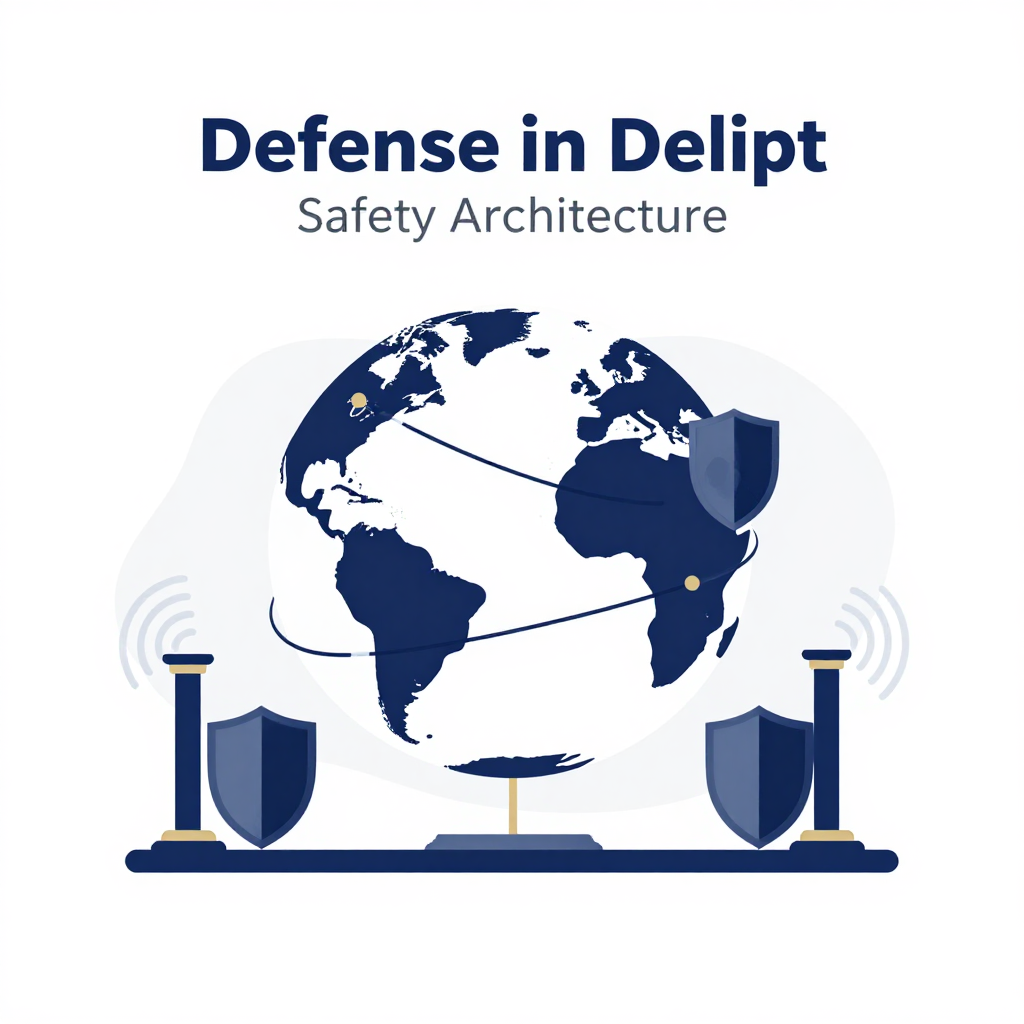
Defense in Depth: Anthropic's Safety Architecture
In the weeks leading up to Fable 5's launch, Anthropic invested thousands of hours in red teaming exercises with the US government, the UK AI Security Institute (AISI), multiple private third-party organizations, and internal security teams. These comprehensive safety assessments were designed to stress-test Fable 5's safeguards against malicious use.
Anthropic adopted a "defense in depth" strategy for Fable 5, recognizing that achieving perfect jailbreak resistance may not be feasible with current AI technology. The company's approach included:
- Strong safeguards designed to dramatically reduce the likelihood of misuse for cybersecurity tasks and other high-risk applications
- Real-time monitoring systems to detect and shut down malicious activities
- A mandatory 30-day retention policy for customer data, enabling forensic analysis of potential security breaches
- Extensive red teaming to identify and patch vulnerabilities before public release
The company acknowledged in its official statement that perfect jailbreak resistance may not currently be possible for any model provider. Every safeguard used in the industry, Anthropic noted, is vulnerable to non-universal jailbreaks that can extract some cyber capabilities in specific circumstances. The industry-wide challenge, according to Anthropic's safety team, is making such jailbreaks either narrow in their effectiveness or extremely expensive to develop.
The Washington D.C. delegation includes members of Anthropic's Red Team who conducted many of these offensive security assessments and understand the threat landscape intimately. Their expertise is crucial in determining exactly what capabilities led to the export control decision and whether those same capabilities could be responsibly used for defensive AI security research.
For more information on how Anthropic's Red Team operates and their recent findings, see our detailed report on Red Team at Anthropic and their Attack Navigator project.
The Washington D.C. Mission: Negotiating a Path Forward
Anthropic's decision to dispatch a team to Washington D.C. represents an extraordinary step for the AI safety company, which has built its brand on proactive safety measures and regulatory engagement. The delegation included top-tier security researchers, policy advisors, and executive leadership with deep government relations experience.
The stated objective of the D.C. mission was threefold:
- Understanding the specific threats: Gain clarity on exactly what capabilities or use cases the government believes necessitate export controls, rather than relying on broad prohibitions that may impact legitimate research and development.
- Exploring modified access models: Propose alternative frameworks that could satisfy national security concerns while allowing appropriate access for cybersecurity research, defensive AI development, and legitimate enterprise applications.
- Establishing transparent communication channels: Create ongoing dialogue mechanisms between Anthropic and relevant government agencies to prevent future surprises and enable quicker responses to emerging threats.
Industry insiders suggest that the delegation includes Anthropic's head of government affairs, several senior research scientists who specialize in adversarial machine learning, and security engineers who helped build the company's safety infrastructure. Their goal is to work toward a resolution that addresses national security concerns while preserving the ability of legitimate researchers and developers to access frontier AI capabilities for defensive purposes.
For additional perspective on how this situation compares to other AI export control cases, see our analysis of CISA's rewritten federal patching requirements for the AI threat era.
AI-Driven Cyber Threats: The Catalyst for Government Action
The US government's decisive action was driven by mounting evidence that AI models like Anthropic's are being actively weaponized by malicious actors. The company's own research, published through its Red Team at Anthropic (Red) in late April 2026, demonstrated that threat actors are increasingly leveraging AI for offensive cyber operations.
Anthropic's research report detailed how adversaries are using AI to conduct sophisticated cyberattacks with alarming efficiency. The report provided detailed analysis of how threat actors are using generally available AI models to assist in nearly every phase of the cyberattack kill chain—from reconnaissance and target selection to exploit development, malware generation, and post-exploitation activities.
The research was particularly alarming because it showed that AI models could assist malicious actors in ways previously thought to require highly specialized human expertise. The report stated: "While Claude Mythos Preview demonstrates where frontier AI cyber capabilities are heading—models able to find and exploit vulnerabilities at a level approaching the most skilled human researchers—our research shows us how threat actors are misusing generally available models today."
What made the findings especially concerning was not just the theoretical capability demonstrated in lab conditions, but evidence that these capabilities were being actively deployed in real-world attack campaigns. The research provided concrete examples of how threat actors were using AI to write malware, identify software vulnerabilities, generate phishing content, and even automate parts of the attack chain that previously required significant human effort and expertise.
The government's determination to act quickly following Fable 5's launch suggests that intelligence agencies may have identified specific malicious campaigns already underway or imminent threats that would benefit from immediate model access restrictions. The speed of response—just three days after the public launch—indicates that authorities viewed the situation as requiring urgent intervention to prevent potential national security harm.
For more on how other AI models compare in terms of cyber capabilities, see our coverage of OpenAI's GPT-5.5 surpassing Mythos for complex attack chains from the UK AI Security Institute.
Looking Ahead: The Future of Frontier AI Access
The export control on Anthropic's Fable 5 and Mythos 5 models marks a turning point in how frontier AI capabilities are governed. The US government's decisive action suggests that similar controls could be applied to other AI developers if their models demonstrate comparable offensive capabilities and pose clear national security risks.
Key developments to watch in the coming weeks and months:
Exemption Requests: Will the US government allow exemptions for cybersecurity researchers, academic institutions, or domestic companies that can demonstrate legitimate defensive needs? The answer to this question will significantly impact the AI security research community, which relies on access to frontier models to understand and defend against emerging threats. Industry watchers note that the Department of Commerce's Bureau of Industry and Security (BIS) typically considers exemption requests on a case-by-case basis, but the evaluation criteria for AI models remain undefined.
Legal Challenges: Could Anthropic or affected customers challenge the export control as an overreach of executive authority or a violation of constitutional rights? Any legal challenges would likely focus on whether the export control authority properly applies to AI models and whether due process was followed in issuing the directive. Industry observers point out that previous export control cases have established precedents for both upholding and striking down restrictions, depending on the specific circumstances.
International Reactions: Will other governments issue their own export controls, or might they accelerate their own AI development programs to avoid dependence on foreign models? The global response will be crucial in determining whether this becomes a widespread regulatory pattern or an isolated incident. European regulators have already signaled they may review their own AI export policies, while Asian governments may take a different approach altogether.
Model Evolution: Will Anthropic and other developers create "sanitized" versions of their models that retain utility for legitimate users while removing dangerous capabilities? The development of safer, more restricted model variants could represent a compromise between security needs and research freedoms. This approach has been used successfully in other technology sectors where export controls are common.
Regulatory Frameworks: Will Congress or international bodies develop formal frameworks for AI export controls, or will ad hoc government orders become the norm? Formal legislation would provide clarity but may take considerable time to pass, leaving a regulatory gap in the interim. The Biden administration has signaled support for legislative action but faces opposition from industry groups concerned about innovation constraints.
Security Implications: Paradoxically, restricting access to frontier AI models may harm cybersecurity by preventing defenders from accessing the same capabilities that adversaries are using. The US government must balance the risk of proliferation against the need for defenders to understand and counter emerging threats. Some cybersecurity experts argue that giving defensive researchers access to dangerous capabilities is essential for developing effective defenses.
Industry Response: How will other AI companies respond to the Anthropic precedent? Will they accelerate their own safety research to preempt regulatory action, or will they challenge the control in court? The response from major players like OpenAI, Google DeepMind, and Meta will shape whether this becomes an isolated incident or the beginning of a new regulatory era.
Anthropic's Washington D.C. mission will be closely watched as a test case for how the AI industry navigates increasingly complex regulatory landscapes and seeks to maintain open channels of communication with government authorities while preserving the safety and ethical integrity of frontier AI development.
The article provides a comprehensive analysis of how this situation emerged, what Anthropic is doing to resolve it, and what the broader implications mean for AI governance in the United States.